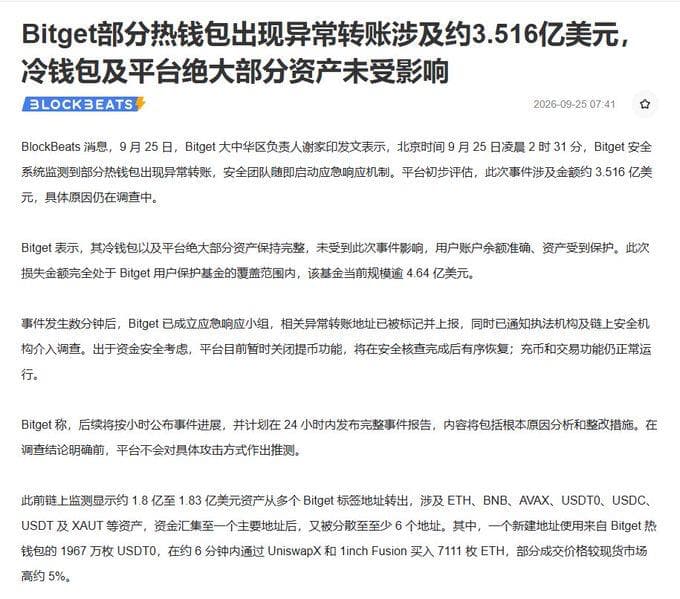
At around 2:30 in the morning on September 25, crypto exchange Bitget detected unusual transfers draining funds from some of its hot and warm wallets, with early estimates putting the loss at roughly $351.6 million. The platform moved quickly to calm the room, reassuring users that cold wallets were entirely safe, account balances remained accurate, and all losses would be covered in full by its Protection Fund, which currently holds over $464 million.
While deposits and trading are still running normally, withdrawals have been temporarily frozen. The suspicious addresses have been flagged, and law enforcement alongside blockchain security experts are investigating the breach. Bitget committed to publishing a full report within 24 hours detailing the root cause and corrective measures. But for the many Chinese expats making a living across Southeast Asia who depend on these platforms to circulate their working capital, no one can really breathe easy until withdrawals are reopened.
On streets across the region, from small shopkeepers and market vendors to late-night workers, many keep their hard-earned money on exchanges for quick turnaround and to cut down on remittance fees and exchange rate markups when sending money back home. When the news broke overnight, WeChat groups immediately blew up with people asking what was happening. The deepest fear for folks out here is having cash trapped right when shop rent is due or payroll needs to be paid next week. Making a life far from home is tough enough—every digit on that screen stands for daily groceries, rent, and family livelihoods. Everyone is just holding out hope that the platform keeps its word and turns withdrawals back on quickly, so people far from home aren't left waiting in the dark.