September 25, 2026 (Singapore time) | The daily grind of going south
Today's roundup
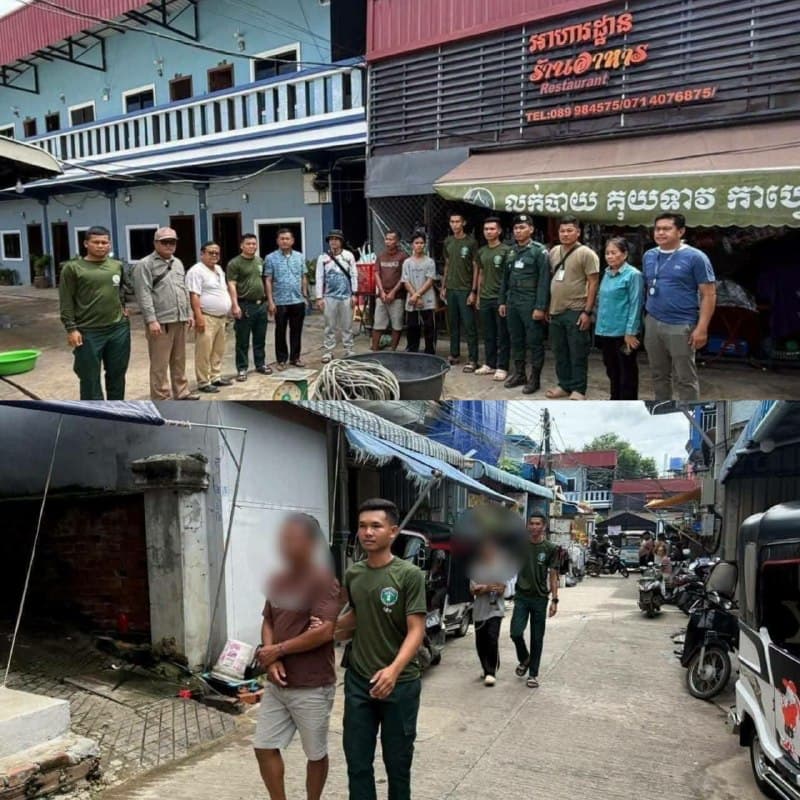
Cambodia: In Sihanoukville's District 4 at 2:40 a.m., someone driving a black Highlander tried to forcibly pull a fellow Chinese national into the vehicle, but was stopped on the spot by Cambodian neighbors on the roadside; the motive is still under investigation. This round of harsh crackdown on online fraud has already detained nearly 5,000 people, and another 77 police officers have been severely disciplined for involvement in fraud; Prime Minister Hun Manet met a delegation from China's Ministry of Public Security, the dialogue mechanism has been upgraded from "2+2" to "3+3," and he stated that telecom fraud must be completely eradicated, while also telling Chinese tourists to feel at ease about visiting. Border ditches in Poipet are rising, and two guides—one old and one young—who were leading illegal crossings were caught on the spot; whole bundles of ropes used to pull people across the water were found at the scene. New 50,000 and 100,000 riel notes have begun circulating; old and new will circulate in parallel, and the old banknotes can still be used as usual to buy groceries and pay rent. Xiaoyi Pay has entered liquidation; within 30 days starting September 28, people must go to BKK1 in Phnom Penh to register and file their claims, or they will lose their right to compensation.
Myanmar: During a raid on a telecom-fraud den in Muse, a gun battle broke out; according to the official bulletin, 543 people were arrested, including 188 Chinese citizens, and weapons and more than 700,000 yuan in cash were seized; to combat gambling and fraud, Mandalay permanently canceled more than 470,000 SIM cards. A Thai civilian rescue organization compared maps and pointed out that people are still being held in the Shuigougu compound; there are further allegations that Yulong Bay hides a black compound where corporal punishment is used to force performance targets, and at a scam company by the Tiaba side of Bankan in Muse, wages have been withheld for months, with pay reset to zero the moment a person walks out the door.
Laos: Shortly after 4 a.m., the security bureau of the Golden Triangle Special Zone raided rental buildings around Xinjing International and took down a "wildcat" group, taking both people and equipment away together.
Notes from abroad: Bitget's hot wallet saw an abnormal transfer out of about US$350 million in the early morning, and withdrawals were suspended; the platform said the user protection fund would fully cover it. Sri Lanka's online system for certificates of no criminal record is under maintenance, so applications have temporarily switched back to in-person processing at police stations; before going, you can first ask clearly via WhatsApp. A British minister of state visited the already-shut "Jincai" compound in Kandal Province and said joint pressure would continue.
Today's dish is Khmer rice noodles, today's recommendation is the Mekong at dusk in Vientiane, and today's slice of history is the connection between Sukhothai and the Thai script—the alleys fill with water quickly in the rainy season, so before heading out ask which road sits higher, and still eat your meals on time.
The hardships and heartaches of going south
Life after going south often gets stuck on a deposit slip or on money that cannot be withdrawn. Foot traffic on the street is pitifully thin; some compatriots finished out their contract and were preparing to close their shop, but the landlord withheld the deposit and refused to return it, and would not even allow them to remove the air conditioner they had paid for themselves. When the police came, neither side could explain things clearly, and in the end the air conditioner was taken away and the deposit was written off. In the early morning, when the news came that the platform had suspended withdrawals, the WeChat groups exploded at once: some people were turning over money for next week's rent, while others had saved up food money to send home. When taking payment, giving the new banknotes an extra pinch and taking a look at that security strip is not being overly suspicious; it is because every single note was hard-earned.
On the streets of Sihanoukville after 2 a.m., people just off the night shift were still waiting for rides, and one car stopped and tried to drag someone inside—fortunately local neighbors could not stand by and stepped in. Xiaoyi Pay's accounts have to be registered within thirty days, and Sri Lanka's certificate now means going to the police station under the blazing sun; these are the small details and hassles of making a life abroad. This is not complaining, but laying life out as it is: to gain a foothold in a foreign land, what you rely on is people looking out for one another and keeping your feet on the ground—not luck, and certainly not shortcuts.
The minds of those who have gone astray
That company in Bankan, Muse, can generate four to five million in turnover a month, yet the people inside have not seen a single cent of wages for months. They want to leave but do not dare—once they step out the gate, the wages they have accumulated are immediately wiped to zero. Most likely, they went in for the two words "high pay" in the first place; now, just to get back their own hard-earned money, they can only remain trapped in a building in the backcountry, letting the days drain away. In Poipet, of those two guides, one was only nineteen while the other was already fifty-two; in flood season they use a rope to lead people across the water, gambling with other people's lives and with the rest of their own.
The people at Xinjing International chose to get to work when dawn was near and people were at their most exhausted, thinking that was the safest hour; and then there were those 77 police officers, who even in uniform could not keep their hands in check. In the hearts of people who have gone astray, most keep a ledger of "just this once" and "one more job and I'll quit," but that ledger never balances. The bitterness may be understandable, but the road is still one's own to choose: no matter how fast you go down a crooked road, it still won't take you home.
The harm caused by the gray economy
With more than 470,000 SIM cards canceled, what lies behind that is extra trouble for ordinary people changing cards, re-registering under their real names, and contacting clients; after one gun battle, soldiers and police were wounded, and small stallholders in the market spent days on edge. Separated by just one border river, the night market on the Thai side still carries the aroma of grilled meat, yet on the other bank inside the compounds there are still groups of young people shut in with no way out, and behind every one of them is a family that has been hollowed out. That predawn scene in Sihanoukville means compatriots working the night shift no longer dare go out alone; and in the allegations about Yulong Bay, squats, sleep deprivation, and corporal punishment are all "performance" squeezed out of compatriots. For the host countries, it means enforcement costs and the reputation of a place; for the Chinese community, it means that when someone says "Chinese," people look a few times more closely. Do not help others maintain cards, rent out cards, or send mass advertisements, and do not believe in "good jobs" and "high profits"; when signing contracts and paying deposits, keep a sharper eye—this is not to scare people, but to protect your hard-earned money and your family's peace of mind.
The letters sent from going south should be about the steam rising from rice noodles, the Mekong at dusk, and money sent home on time—not gunfire, ropes, and wages wiped to zero. After half a lifetime adrift, the ups and downs of the world all become stories; through thousands of words, every line is filled with deep feeling—have you received that letter sent from Southeast Asia?