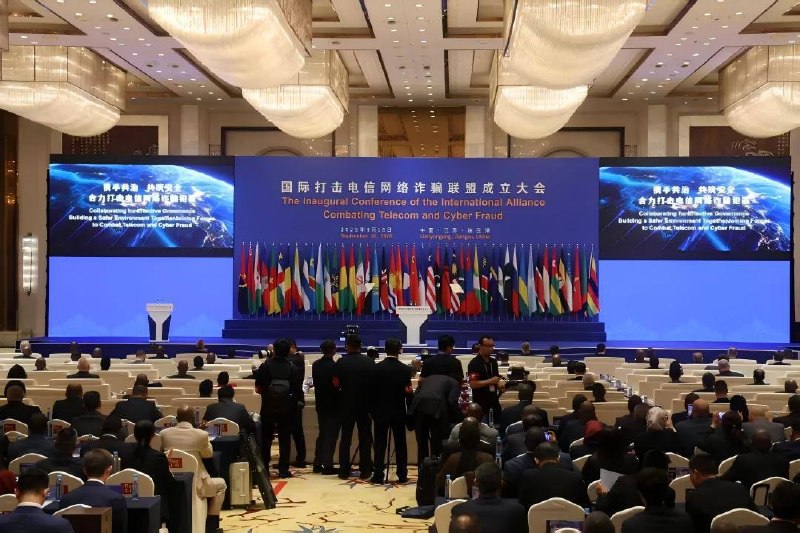
A few days ago in Lianyungang, the International Alliance to Combat Telecom and Online Fraud officially launched. With 46 countries stepping up as founding members and another 34 sitting in as observers, alongside officials from the United Nations and Interpol, the gathering wrapped up with a joint statement.
Let's be real: online scams are no longer run out of a single hideout. Traffic generation, chatting up victims, tech support, and money laundering are now split across different countries, meaning a single case often spans multiple borders. Trying to root out the whole chain on your own is an uphill battle. These syndicates just cross a national line and keep right on scamming.
Still, the numbers tell a story. In the first half of this year, domestic telecom fraud cases dropped by 15.6 percent compared to the same period last year, marking eleven straight months of decline. But scammers are also adapting, scattering their bases and turning to AI and cryptocurrency, making the pursuit of cross-border criminals and stolen funds harder than ever.
This time, the 46 nations are setting up regular, structured cooperation designed to cut through legal and evidence-gathering red tape between countries, fully opening up channels for sharing tips, tracking suspects, and following the money. The game is leveling up: instead of just grabbing low-level runners, the goal is to take down the entire black-market chain from top to bottom.