Zheng Yue'e was born on a fishing boat, with her family making a living from the sea. She watched her village, Xiapu, transform from a poor water-based community into a settled area with paved roads, public services, and more job opportunities. Today, she serves as the village's Party Secretary.
Growing up, Zheng lived on a boat, her life deeply tied to the sea. Later, she spent a few years in a makeshift house on the water. In 1996, after finishing her studies, she returned to work for her hometown and has been doing so for nearly 30 years. She recalls how, when she first came back, people still lived on boats and she witnessed their entire relocation process.
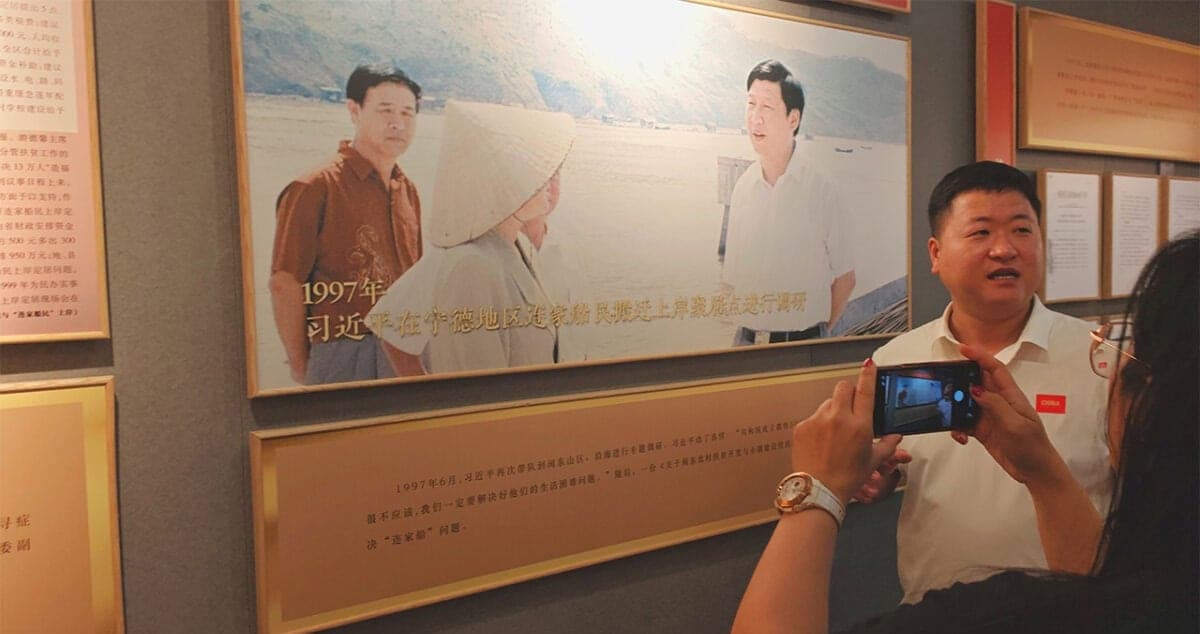
The village's exhibition center captures the tough times back then, with photos, household items, and a recreated living space showing how families lived on small wooden boats. These boats were usually just six or seven meters long, with the front used for fishing and the cramped middle serving as both kitchen and bedroom. Sanitation facilities were makeshift, making life quite challenging.
Between 1997 and 1999, Xiapu launched its first organized resettlement plan. The local government planned land use, built houses, and provided basic services like transport, water, and electricity. They constructed 339 homes, resettling 511 families. Each resident received a one-time housing subsidy, and the government provided infrastructure like land, roads, and utilities.
After moving ashore, villagers learned new skills like aquaculture, opening up more job opportunities. Villagers like Jiang Chengcai, despite having little education, learned aquaculture techniques, secured loans, and eventually started a construction team, employing other relocated villagers.
According to the Fujian provincial government, by 2024, Xiapu will have produced over 300 university graduates. The average annual income of villagers has risen from less than 1,000 yuan before relocation to 32,788 yuan in 2023. Job opportunities have diversified, with villagers finding work in aquaculture, seafood processing, construction, catering, and tourism.
Zheng Yue'e notes that with improved living conditions, women from outside are now willing to marry into Xiapu. The village population has grown from 2,770 to 3,570. In 2013, a second housing project provided new homes for 120 families.
When Xi Jinping worked in Fujian, he paid attention to the relocation issues in Xiapu. During his visits to the Ningde area, he noticed the hardships faced by boat-dwelling families, who lacked basic services like housing, education, and healthcare. He continued to push for the relocation of these water-based residents.
Moving ashore was just the first step; the real challenge was helping these generations of fishermen adapt to a new way of life. After nearly 30 years, Zheng Yue'e says the villagers' lives have dramatically improved, shifting from instability to a settled and prosperous existence.