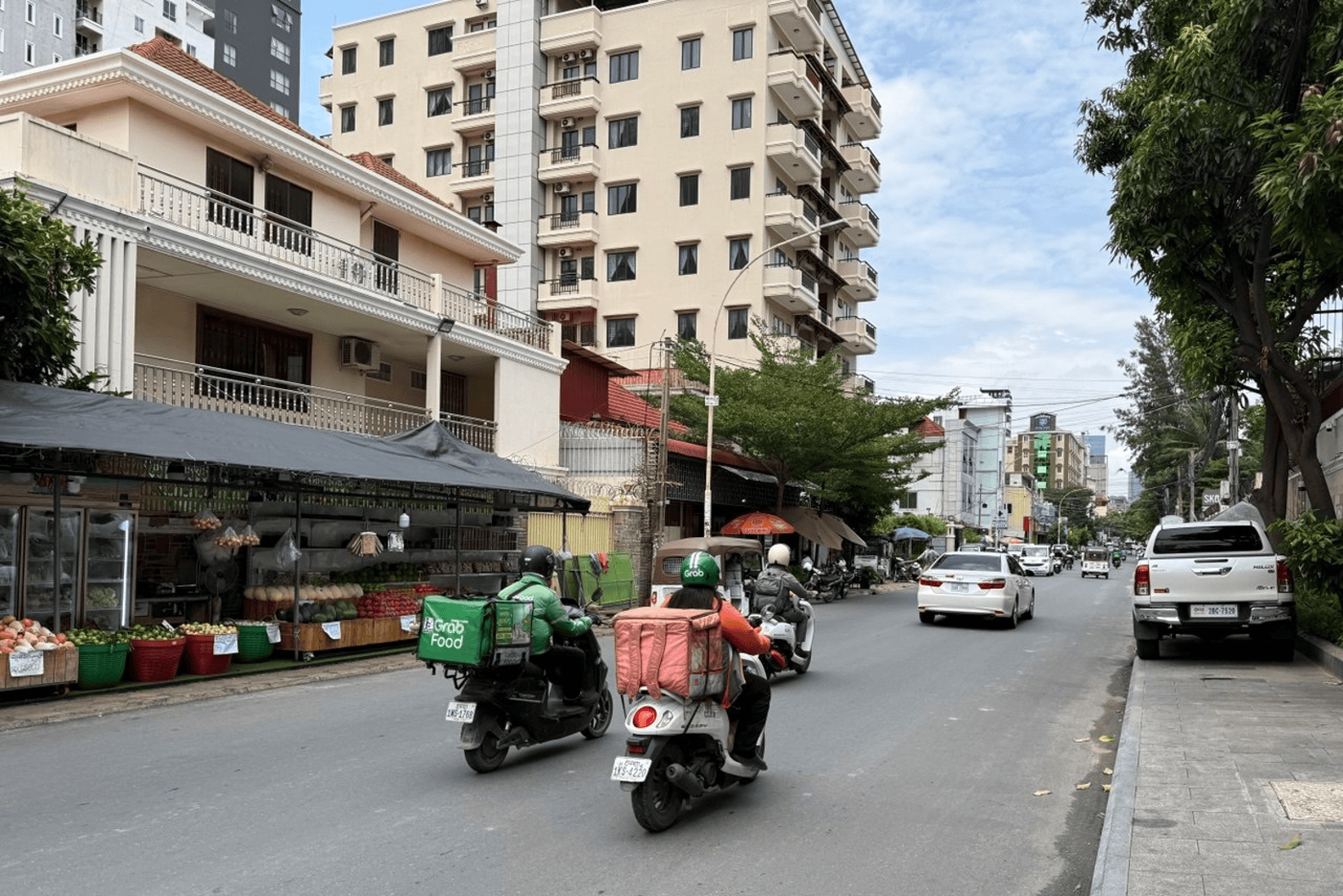
Let's be real, for food delivery riders, their job is basically making a living on the road. Under the scorching sun, drenched in the rain, weaving through traffic, always rushing against the clock – that's just their daily grind. But from a safety perspective, these are all very real dangers. Back in the day, when we talked about workplaces, we'd think of factories, construction sites, or offices – places with walls and roofs, machines, supervisors. If something went wrong, it was clear who was responsible. But the delivery industry is different now. Riders don't have a fixed workstation, and they might not even see a manager. All day long, they're guided by a mobile app. The app assigns orders, navigates, records everything. Good reviews, bonuses, and how many orders they complete directly impact how much they earn that day and how they ride. No matter how the system changes, the risks on the road haven't decreased one bit. Here on the streets of Phnom Penh, with so many motorbikes, seeing delivery riders weaving in and out, you can't help but worry for them.
Accidents on the road are, of course, the scariest thing. But just focusing on crashes is a bit narrow-minded. Think about it: riding a motorbike all day, exposed to the wind and sun, their bodies definitely take a toll. Over time, fatigue easily sets in. Plus, they have to multitask – eyes on the road, hands operating navigation, ears listening for phone alerts, and communicating with customers. Their minds are constantly working overtime, and the mental pressure is huge. Sometimes when we see a rider speeding, we might think, "Why is this person so careless?" Yes, road safety is everyone's own responsibility. But we also need to ask, why are they in such a rush? Are there several more orders waiting? Are they chasing a bonus, needing to complete more trips? Or maybe they haven't earned enough today and want to make up for it with extra deliveries? These reasons, of course, don't justify speeding. But they at least remind us that a person's behavior at work is often forced by their environment. Eating supper at a roadside stall at night, you often see riders so tired they're dozing off on their motorbikes. It's really not easy.
Honestly, when it comes to safety, we can't always blame the person at the very front when something goes wrong. If we really want fewer incidents, we need to look at the environment they work in daily. Just telling riders to wear helmets and follow traffic rules is important, of course, but it's far from enough. We also need to consider if the platform's order assignment and bonus mechanisms allow them enough room for safe choices, so they don't have to take risks just to meet deadlines. Nowadays, algorithms call the shots. There's no boss watching over them; tasks are assigned, and performance is calculated directly. You can't say an algorithm causes an accident, but how it's designed definitely influences how riders operate. Think about it: if it's pouring rain, can a rider really ignore time pressure and slow down? If they've been riding for over ten hours and are already exhausted, can we still expect them to stay focused? If the roads are completely jammed, is it reasonable to still demand on-time delivery? These issues were common in factories and construction sites too; now they've just shifted to a different setting. Some officials say this issue is being discussed internationally, and the International Labour Conference even adopted new standards. Of course, it's not to say the delivery industry is bad. It definitely makes our lives easier and provides job opportunities for many people – I use it often myself. The key is how we can enjoy the convenience without forgetting those who are hustling on the roads. As consumers, we can actually help a bit too. We're all used to speed – hot food, on-time parcels. If that little icon on the screen stops moving for too long, we start to get anxious. But behind that icon is a real person, battling traffic, weather, and fatigue. If my food is a few minutes late because of heavy rain and the rider slowed down for safety, I honestly wouldn't consider that bad service. It just means someone chose safety over risking their life.