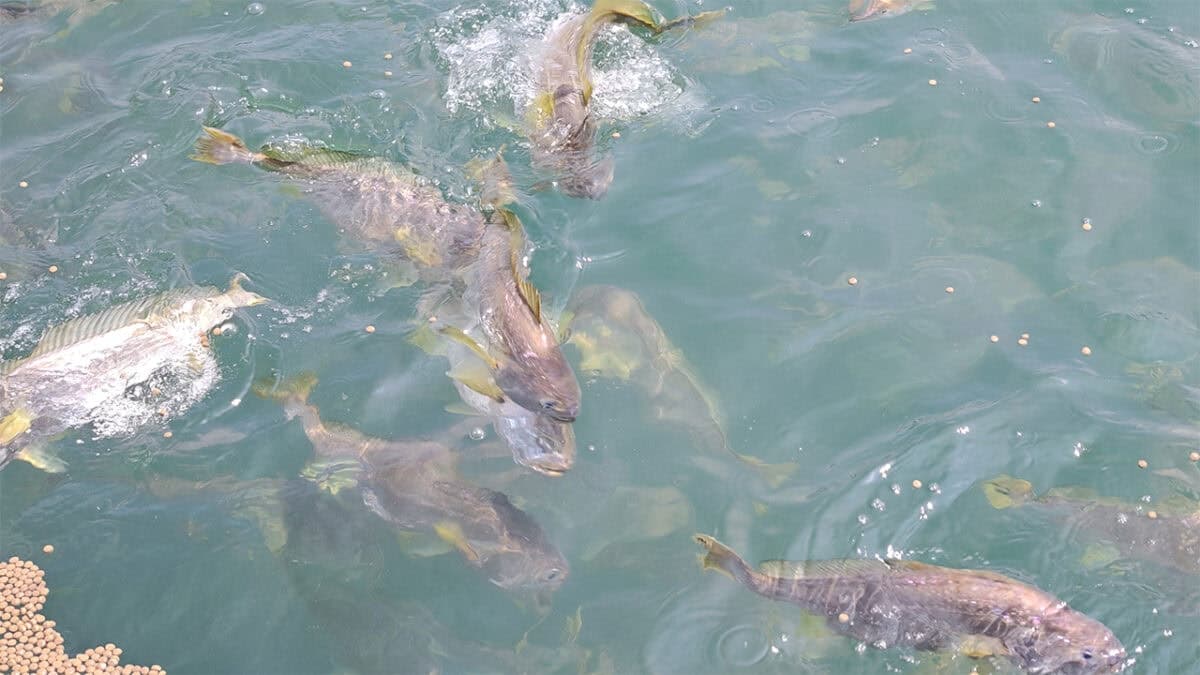
In Ningde, Fujian, large yellow croaker farming has turned into a massive industry. But as a local aquaculture boss there pointed out, you cannot simply copy and paste the same fish into Southeast Asian waters. Places like Cambodia have entirely different water temperatures and marine conditions. Still, the underlying playbook—selective breeding, modern net-cage systems, disease prevention, processing, and cold-chain logistics—is fully transferable. By picking native species that thrive in local waters and applying these modern standards, growers here could skip a lot of painful trial and error.
It was not always smooth sailing in Ningde either. Fishermen there used to struggle until scientific research, government backing, and private investment joined forces to build out a complete supply chain. Today, it goes far beyond automated feeding for croakers; there is specialized feed and equipment for abalone, lobster, and prawns too. But as the seafood boss warned, living off the sea requires taking care of it first—if the water quality deteriorates, the fish will not survive. Interestingly, the industry's upgrade has also brought educated young people back to coastal villages. Instead of crowding into big cities for work, university grads are heading home to handle technical and managerial roles for local seafood firms.
That offers plenty of food for thought here in Phnom Penh. Walking through wet markets or past street stalls, you see plenty of fresh river catch and seafood on display. But the lack of proper cold-chain storage and preservation means good fish often loses its freshness—and its value—on the way to market. If local growers can master similar breeding and processing methods, Cambodian fishermen might finally see their hard work translate into better pay. Riding a motorbike along the Mekong River at night, passing street food vendors enveloped in savory smoke, it is easy to picture the possibilities. If local markets can secure a steadier supply of high-quality, diverse fish, everyone gets a better plate of food when sitting down for late-night bites.