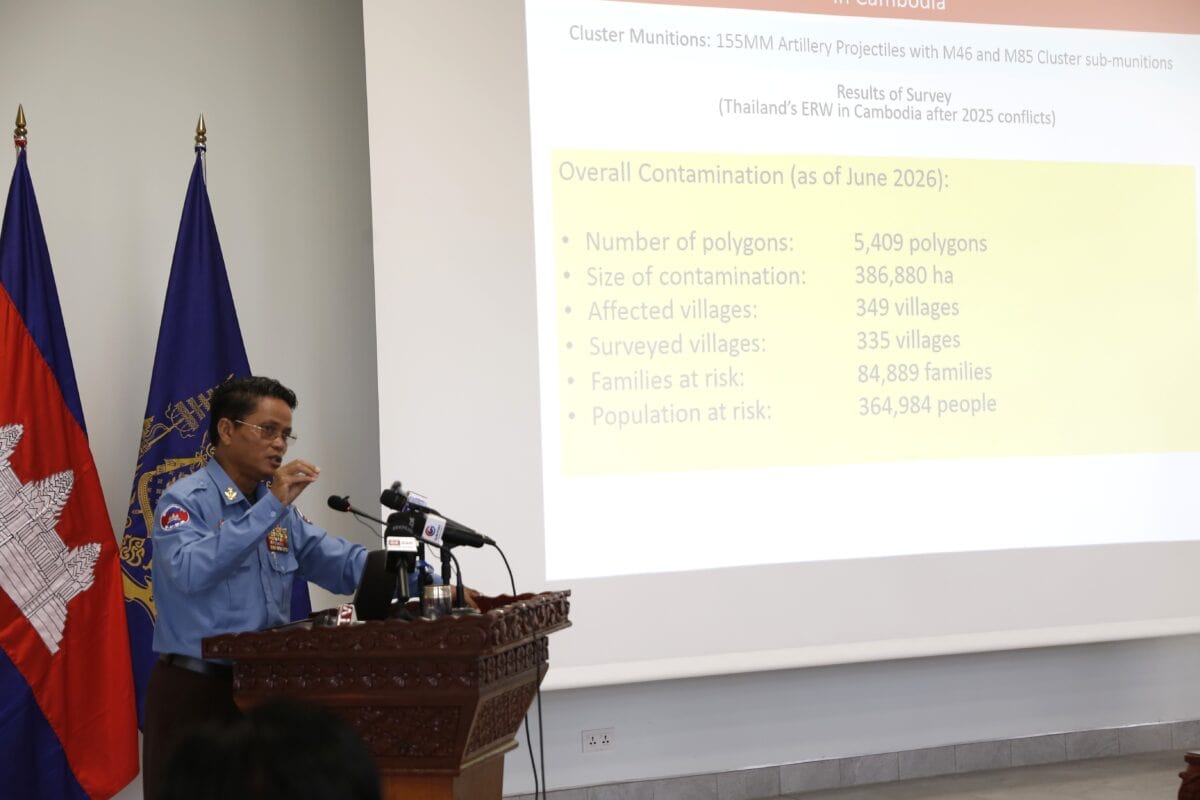
Walking around Phnom Penh, you hear all sorts of talk over coffee and meals. This time, Heng Ratana, director-general of the Cambodian Mine Action Centre (CMAC), laid it all out at the Technical Museum of Peace: cleaning up the unexploded ordnance and war remnants left behind by last year’s Cambodia-Thailand border clashes will cost roughly $1 billion and take more than ten years.
Local media report that this new mess includes cluster bombs, aerial bombs, and various types of artillery shells. Investigators have found unexploded submunitions in villages, on school roofs, and even hanging from tree branches and bamboo groves. In some areas, the failure-to-explode rate is as high as 30 to 40 percent. Many spots along the border remain off-limits, and tens of thousands of families are living with hidden dangers right outside their doorsteps and farmland, making it impossible for them to return home and live in peace.
Cambodia has spent decades clearing landmines and had finally managed to get rid of a huge chunk of the old explosives, only to be hit with this new bill. Heng Ratana noted that the national mine-free targets originally set for 2030 and 2035 will now all have to be recalculated. This isn't just about money—it’s stopping people from farming and traveling safely. Everyone is watching to see how this gets handled, and working through this tough challenge ahead will depend on a step-by-step effort involving both the government and the international community.