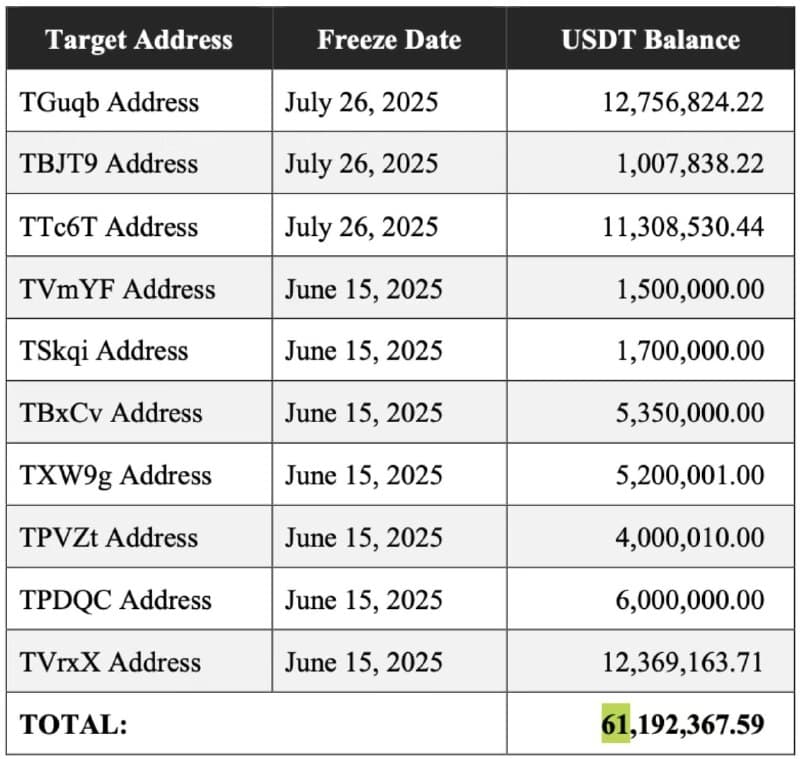
Federal prosecutors in New York’s Southern District recently dropped a bombshell lawsuit detailing how Iran used a "shadow fleet" of tankers to secretly ship crude oil to Asian refineries. The operation laundered cash through Hong Kong front companies and moved massive amounts of USDT stablecoins—racking up over $1.5 billion in total transactions. Working directly with the FBI, Tether stepped in and froze 10 TRON wallet addresses linked to the Iranian network. In an instant, 61.19 million USDT was turned into dead money.
The way US agents tracked it down was brutal in its precision. They matched USD correspondent bank wire logs with on-chain crypto analysis, following wallet activations and transfers until they mapped out the entire web. Many people still believe that holding USDT makes them invisible and invincible. But this case showed the reality: if the issuer gets an official directive, they can paralyze an account from the backend at a moment's notice.
Here in Phnom Penh, you see the local side of this crypto wave everywhere. Sit at any roadside tea stall and you'll spot young freelancers and small-time cross-border traders glued to their phones, talking about sending money via USDT because it feels quick and reliable. News like this is a stark reality check on just how tightly those reins are actually held. Sitting under a squeaking fan in a rented room scrolling through the headlines, it leaves you with a heavy thought: no matter how hard you hustle out here on the ground, if you cross the wrong line, the money you sweated for can be locked away in seconds.