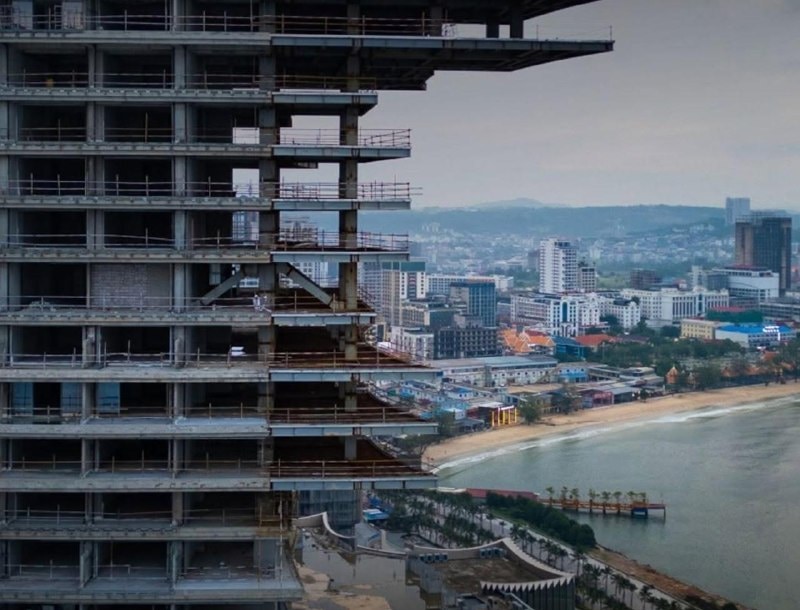
Riding a moto through Sihanoukville these days, you are surrounded by unfinished, rusting concrete skeletons—a stark contrast to the frantic boom years. A recent Bloomberg deep dive hit a raw nerve, pointing out how the former beach resort has morphed into a hub for casinos and cyber-scams. They rough-estimated that the industry pulled in around $12.5 billion in 2024 alone.
Crackedown efforts are ongoing, but the scars on the ground are massive. Local workers lost their livelihoods, and international visitor numbers in the first half of 2026 plummeted by 47.9 percent. Sipping iced coffee at a streetside stall and chatting with locals, everyone knows the score: with whole neighborhoods of massive compounds, and thousands of concrete buildings hooked up to water, electricity, and the internet, these operations couldn't run just on the ingenuity of a few foreign scammers. Someone at the top had to be backing them and nodding things through. The real power players and financial networks behind the scenes remain untouched.
International media is watching closely now, and the feeling on the ground is that Prime Minister Hun Manet’s government shouldn't just brush off these reports as smears, or limit arrests to low-level foreign foot soldiers. People are waiting to see if the real kingpins and implicated officials will ever be exposed, and whether the public will get a straight answer on frozen dirty money and the whereabouts of top bosses. Life goes on down here in the streets, but the dark cloud hanging overhead is hard to miss.