
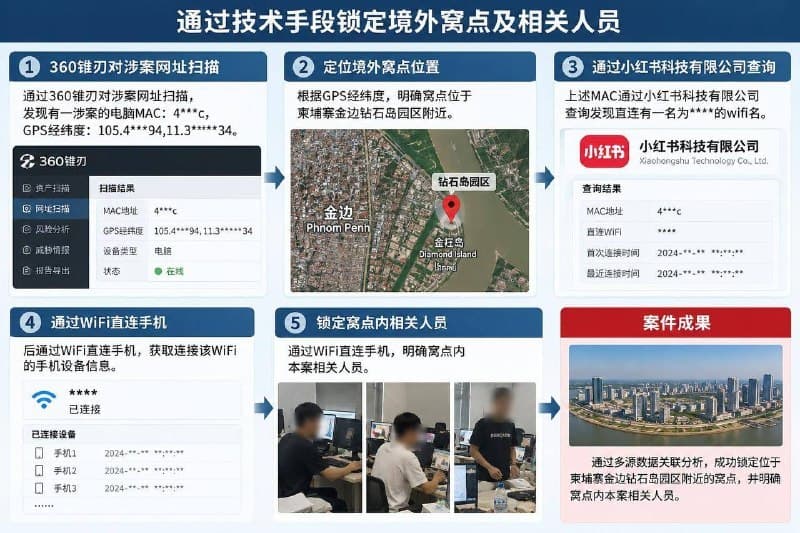
According to the workflow, agencies from countries such as China and the United States leverage network intelligence and multi-source data analytics to track suspicious servers, networking hardware, geographical locations, and associated user terminals. Once actionable leads are established, the intelligence dossiers are handed over to law enforcement agencies where the physical compounds operate.
Using Phnom Penh, Cambodia, as a simulated scenario, the demonstration details the correlation process running from target URLs and hardware signatures down to geolocation data, local Wi-Fi networks, and connected devices—progressively narrowing down the suspect perimeter. The core logic remains straightforward: overseas analysts handle the technical tracing and intelligence gathering, while local police conduct the physical verification and on-ground raids under domestic law.
ToNanyang Heat Week|check in & spin for Premium