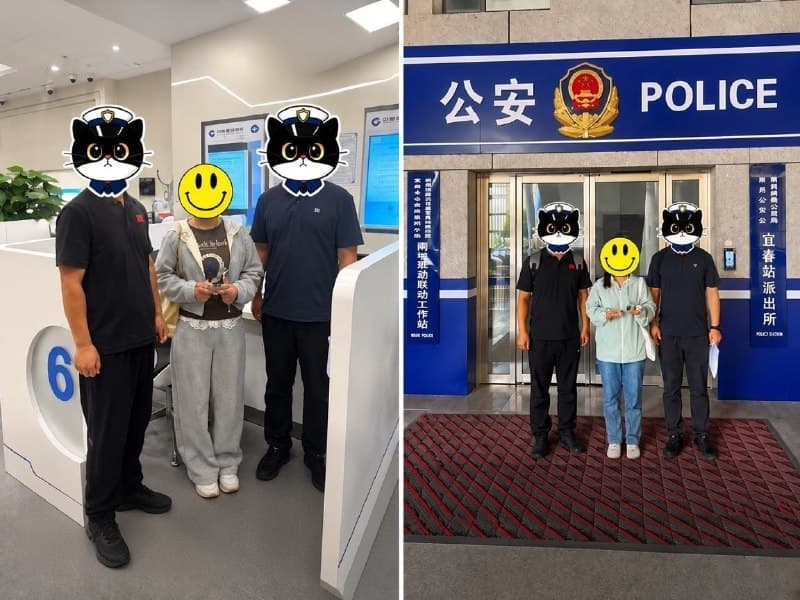
According to a report by the Northern Legal Daily (Beifang Fazhi Bao) on October 18, a man surnamed Li from Shulan, Jilin Province, experienced a bizarre unauthorized transfer. On October 2, a total of 63,000 yuan was drained from Li's bank account without him entering any passwords or making any transfer operations. Local police arrived at his door after receiving an anti-fraud warning, and the investigation soon revealed that scammers had remotely hijacked his device using Trojan malware to move the funds silently.
To recover the stolen funds, police officers spent more than ten consecutive days tracking the money across 4,000 kilometers, traveling to eight cities across three provinces and regions including Inner Mongolia, Gansu, and Jiangxi. They traced the fund flows card by card and discovered that several intermediary accounts were lent or rented out by their original holders, which were then leveraged by fraud rings to launder and disperse illicit money. Ultimately, all 63,000 yuan was tracked down and fully recovered.
This incident sheds light on the mechanics of remote-access malware combined with underground card-leasing chains. Such Trojans often hide inside apps or links of unknown origin, and once a device is remotely controlled, transfers can go through without the owner ever knowing. Meanwhile, bank accounts rented or borrowed from third parties serve as convenient layers to obfuscate dirty money. For individuals at home and abroad, downloading unverified applications or renting out personal bank cards remains a dangerous hazard that risks both financial security and severe legal liability.
ToNanyang Prediction Market: https://tonanyang.cc/webapp/