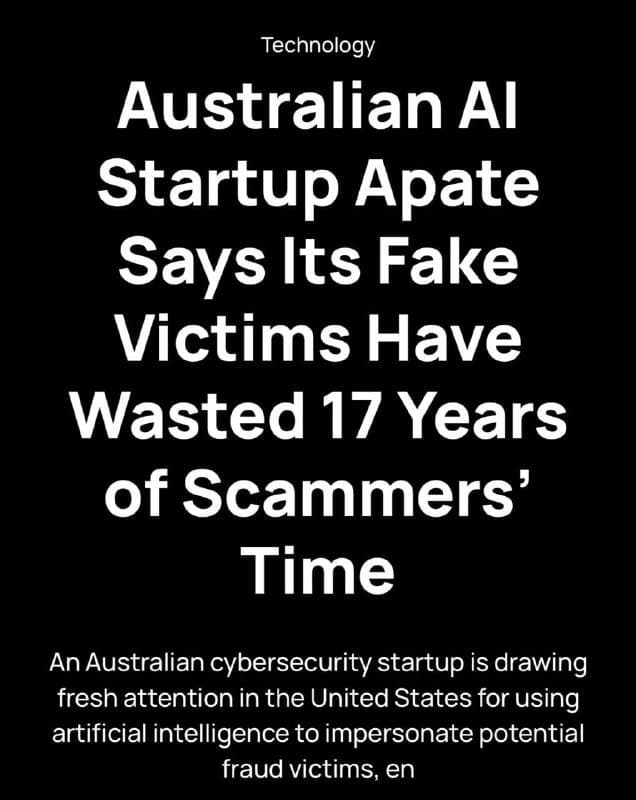
Founded in 2024, the startup takes its name from Apate, the Greek goddess of deceit, with technology originating from research at Macquarie University in Sydney. Founder and CEO Professor Dali Kaafar came up with the idea during a family picnic after stringing along a phone scammer for more than 40 minutes to entertain his children. Realizing that every minute he consumed was a minute denied to a real victim, he translated machine learning and natural language processing research into a scalable commercial venture.
The company has deployed over 350,000 AI agents capable of simulating various ages, genders, accents, and languages. To prolong engagement, the bots use Australian slang and act confused—complaining about poor reception, misplaced reading glasses, or wrong button presses. Operating across voice, SMS, email, malicious links, and social messaging groups, the platform either receives diverted suspicious calls from telcos or proactively lures fraudsters using honeypot numbers.
The real prize goes beyond wasting fraudsters' time: it is baiting them into revealing critical intelligence, including bank account details, crypto wallet addresses, contact numbers, and phishing domains. Co-founder and Chief Business Officer Brad Joffe noted that while telcos merely block numbers that scammers quickly replace and banks only catch suspicious transactions after victims are engaged, their platform approaches scammers directly to extract actionable data before harm is done. Joffe stated that the system interacts with tens of thousands of scammers daily across multiple channels.
According to data disclosed by the company, its AI agents have logged approximately 2.5 million conversations, tied up roughly 17 years worth of scammers' operational time, and gathered over 250,000 intelligence items for clients to block, though these figures have not yet undergone independent third-party audits. In practical deployment, Australian carrier TPG Telecom diverted nearly 590,000 suspicious calls to the system. A GSMA pilot report noted that an initial trial routed over 280,000 calls, burned more than 100 days of scammer time, achieved a peak single-call duration of 54 minutes, and maintained roughly 98 percent detection accuracy. Commonwealth Bank saw fraud-related losses plunge by 76 percent after adopting the solution, while another unnamed Australian bank neutralized 22 scam incidents.
Capital expansion is already following the operational traction. In August 2026, Apate secured an 8.15 million USD seed funding round, pushing total financing near 10 million USD. The startup has re-incorporated in Delaware and plans to establish a London office while scaling across North America. Kaafar described the bots as the 'perfect victim in the eyes of a scammer,' where every minute spent in an AI loop shields ordinary citizens from real harm.
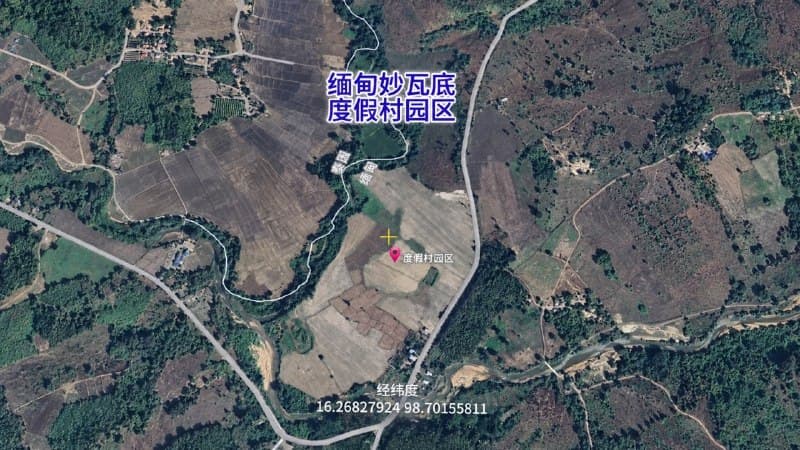
As AI becomes both an offensive weapon for cross-border fraud syndicates and a defensive sinkhole built by intelligence firms, industrial-scale boiler rooms across Southeast Asia may find their script-running and money-laundering channels bleeding time and infrastructure at an increasingly steep cost.
ToNanyang Prediction Market: https://tonanyang.cc/webapp/