
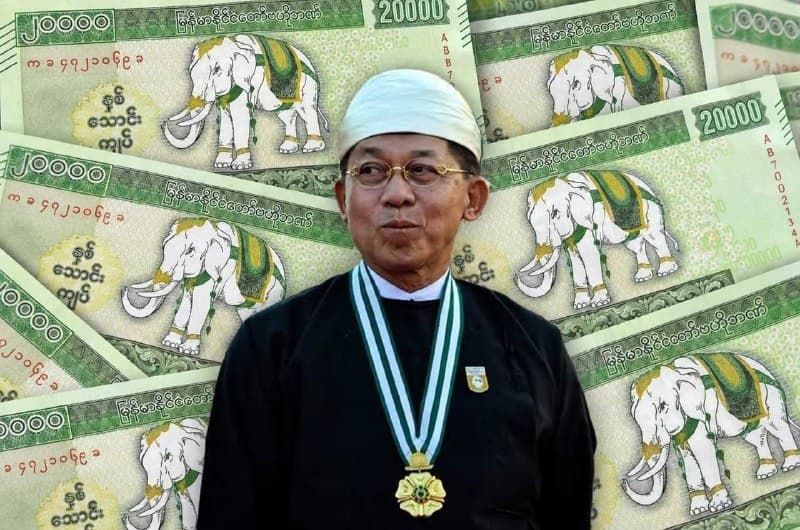
According to the Union of Myanmar Federation of Chambers of Commerce and Industry (UMFCCI), Min Aung Hlaing's military government plans to borrow an additional 210 billion kyat from the central bank. On top of that, word is circulating that new 50,000-kyat notes will be printed, though this remains a rumor for now. The news has sparked panic in the market.
In Yangon, the dollar has climbed to 4,600 kyat, and the rush to buy gold and US dollars is back. Gold has broken through 100,000 kyat per tical, and some gold dealers have simply stopped trading.
Everyday prices are rising too. Fuel has gone up for three weeks in a row and now tops 5,000 kyat per liter, with many filling stations limiting purchases or running dry. Palm oil has risen to between 23,000 and 30,000 kyat per viss. Both fuel and cooking oil rely heavily on imports, so they are the first to feel any move in the exchange rate.
Economists point out that the junta is printing money to cover its deficit and that inflation keeps getting worse. Put simply, the more money is printed, the less the kyat is worth, the more people want to swap it for dollars and gold, and the higher the exchange rate goes. That loop rarely breaks on its own.
For Chinese living and doing business in Myanmar, the impact is very real. Import payments now move with the exchange rate, stock on the shelves and unpaid invoices can lose value to currency swings, and payroll and remittances need to be recalculated. For now, it makes sense to exchange money in smaller batches, keep a buffer, and be extra careful with informal money changers.
Where the kyat goes next depends on whether the central bank loan and the new-note rumor actually materialize. Watch closely and stay careful.
Like for points, predict to win points|ToNanyang Prediction Market: https://tonanyang.cc/webapp/