
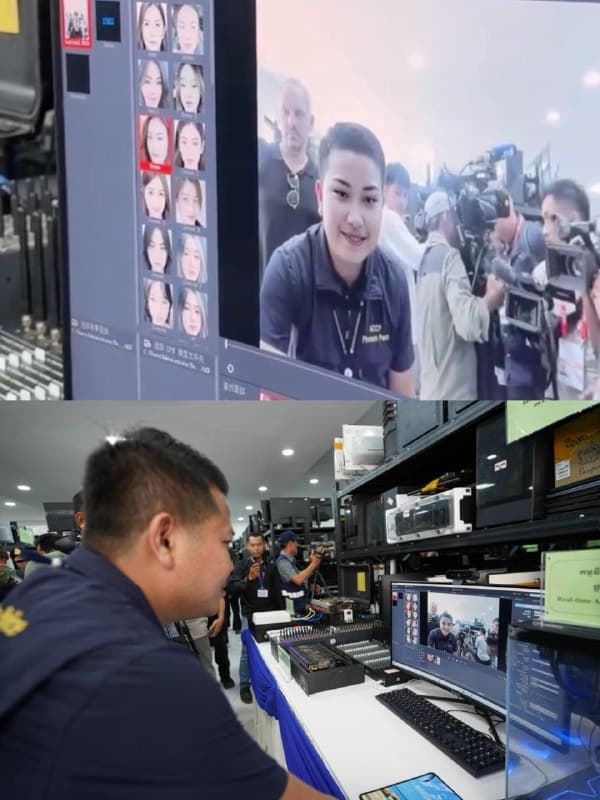

On September 22, the Phnom Penh Municipal Police Headquarters looked less like a police station and more like a crowded warehouse of modern scam gear—the huge haul confiscated during recent anti-fraud crackdowns. Local and foreign reporters were invited in for a live demonstration of the real-time AI face-swapping software scammers use. A camera aimed at an officer, and in an instant, a completely different face appeared on the computer screen, mimicking every blink and head tilt in real time. Police explained that this exact tech is how fraud syndicates fake their identities to pull off online scams.
The sheer volume of confiscated gear was overwhelming. Police put 29,900 seized mobile phones on display, along with thousands of computers, monitors, and towering stacks of foreign SIM cards. Worse yet were the fake uniforms, badges, and credentials laid out on nearby tables: counterfeit gear designed to mimic Chinese police officers, Japanese police, and even agents from the U.S. FBI and CIA—down to fake police IDs from Xiamen, China. If someone popped up on a video call wearing one of those uniforms, it would be almost impossible for an ordinary person to spot the fake.
For anyone working and renting a room here in Southeast Asia, every dollar earned comes from long hours and real sweat. Out here far from home, families back in the motherland are always holding their breath, worrying about how we're doing. So whether you're picking up a call while walking down the street or sitting in your rental apartment, if the conversation turns to sending money, force yourself to freeze for half a second—no matter how urgent it sounds. Set up a secret code word with your family that only your inner circle knows. In a world where seeing is no longer believing, holding tight to your hard-earned money is the safest way to get by out here.