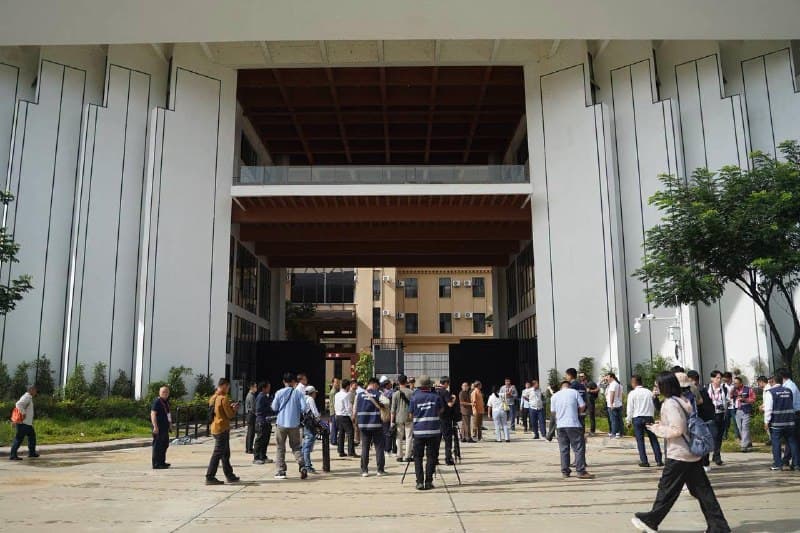

Over September 21 and 22, Cambodia’s Ministry of Information gathered a crowd of 74 journalists from 39 news outlets—half local press, half foreign media. Sweating through the sweltering heat, the convoy traveled from Prey Veng province to Svay Rieng, before looping back to Phnom Penh. The goal? A firsthand look at former online scam compounds that had previously been shut down.
These places used to be heavily guarded strongholds, surrounded by high walls topped with barbed wire and lit up bright at night, keeping neighborhood iced-coffee and fried-noodle vendors at a cautious distance. This time, the heavy gates were thrown open for cameras. The rooms inside were stripped bare, except for a few broken desks and chairs too wrecked to carry away. The official guided tour carried an undeniable message: the government wants to lay its cards on the table and show the outside world that these operations are truly being dismantled.
The field trip was really a warm-up act for the bigger show. From September 23 to 24, Phnom Penh is hosting an international conference on combating cyber-scams, bringing in delegates from over 20 countries and three international organizations. A palpable tension hangs in the capital air along with the haze of motorbike exhaust, with visibly more police patrolling the intersections. As high-level talks unfold inside chilly, air-conditioned hotel halls, locals at roadside stalls are watching closely to see what real action will come out of it all.