On Sept. 24 (Thursday), Chhay Sinarith, head of the Cambodian government's anti-scam committee and anti-scam minister, said in an interview with Reuters on the sidelines of a global anti-scam conference in Phnom Penh that the Cambodian side was collecting evidence and preparing to move against the "masterminds behind the scenes" of large cyber scam syndicates. Outsiders have long criticized the crackdown for not touching the people truly responsible.
He said: "Whether they are masterminds, accomplices, bosses, assistants or protectors, legal action takes time, and it also requires evidence. So cooperation is extremely important." He said intelligence provided by international partners had already enabled the Cambodian side to take action against some suspects; if investigations were exposed too early, suspects might flee.
This week, Cambodia invited representatives from more than a dozen countries, including the United States and China, to Phnom Penh to discuss how to deal with this industry, which has damaged Cambodia's reputation and hurt its economy. After the pandemic, Cambodia and some other Southeast Asian countries became hubs for industrial-scale scam centers: workers are trafficked in, confined in harsh conditions, and forced to scam strangers online. The U.S. side says that in 2024 alone, scam compounds in the region swindled $10 billion from Americans.
Last month, Chhay Sinarith announced that since the start of the year-long crackdown, Cambodia had eradicated large scam compounds, but officials did not release a complete list of raid locations. Analysts were unconvinced, believing the operation had let off the industry's senior figures and protectors. John Wojcik, a senior analyst at blockchain intelligence company TRM Labs, said: "It is clear that many large compounds are still operating, while other operators, after clearing out, have dispersed to smaller, more scattered sites. The technology, payment channels, money-laundering networks and middlemen that support this industry are also still operating on a large scale."
Chhay Sinarith also said the authorities were expanding their investigation into Prince Group's financial network. The United States has accused the Cambodia-based conglomerate of being a front for multi-billion-dollar cyber fraud and money-laundering activities. Its China-born founder Chen Zhi was arrested in Cambodia earlier this year and deported to China. Lawyers for Prince Group did not immediately respond to requests for comment.
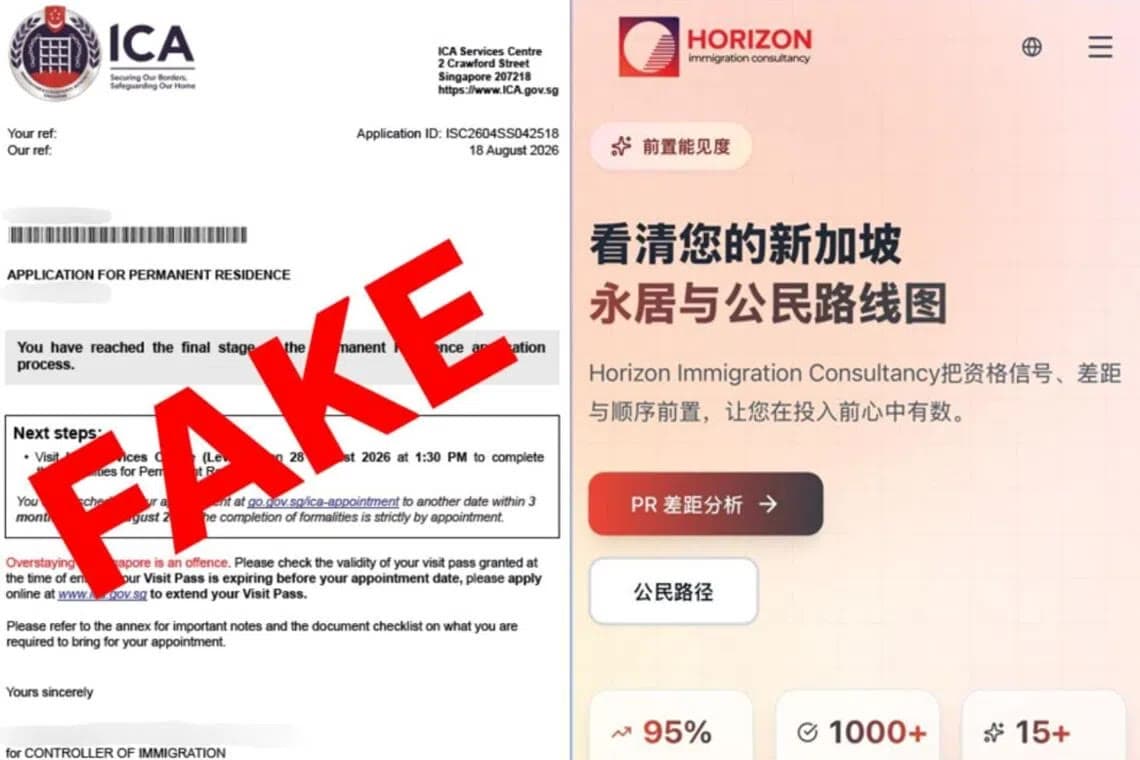
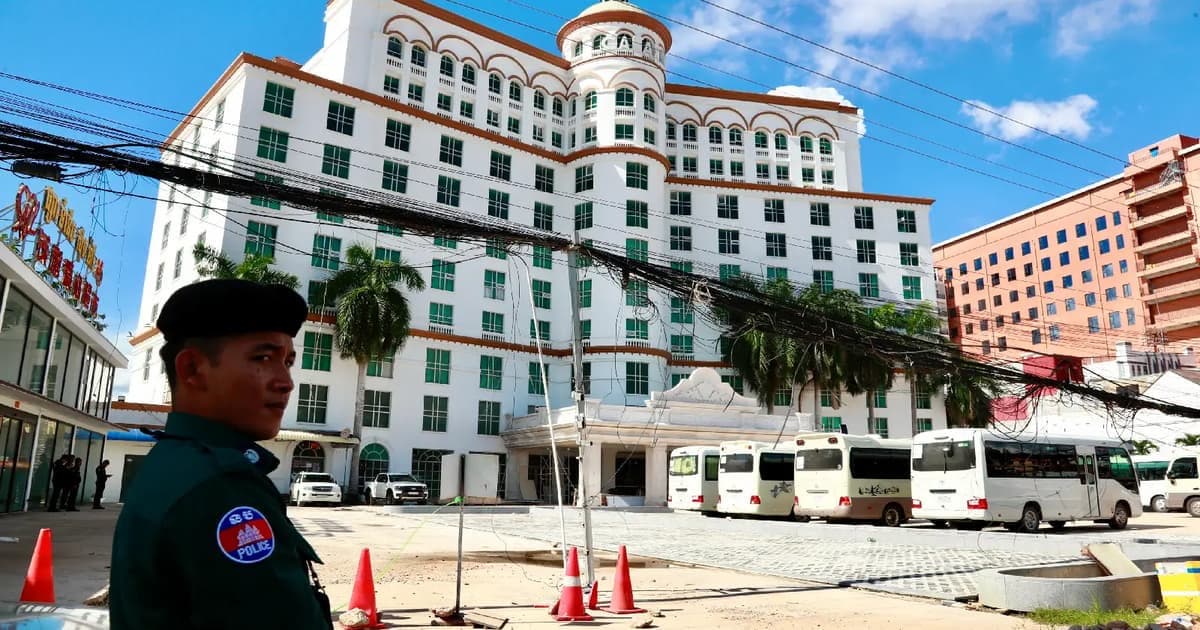
Reuters reporters this time visited 2 scam centers on the outskirts of Phnom Penh that the Cambodian side said belonged to Prince Group. Officials said these huge building complexes had once housed several thousand workers; at one of them, a fake "Singapore police station" had even been set up, allegedly specifically to impersonate law enforcement officers in scams.
People trying to make a living in Phnom Penh and Sihanoukville are all familiar with the words "compound." Big compounds have been shut, frozen and sealed, one report after another in the news; but what analysts said about "breaking up into smaller units and dispersing to small sites" is what ordinary people should remember more. Whom to crack down on and whom to arrest is the government's business; not letting ourselves and our families be lured in by a "high-paying" message, and not letting our hard-earned money be cheated away by a stranger in a "police uniform," is our own business.
Scam-proof guide: high-paying job recruitment and "police impersonation" scams
I. How the scam traps people
● Luring people with "high pay": The Chinese Embassy in Cambodia said in a consular reminder that many so-called overseas "high-paying recruitment" postings involve gray and black industries such as online gambling, telecom fraud, prostitution, gambling and drugs; once trapped in them, people are highly vulnerable to illegal detention, violent abuse, and may even face danger to their lives.
● Letting you enter via a "small road": the embassy mentioned that a large number of victims entered Cambodia through illegal means such as clandestinely crossing the border. Clandestinely crossing the border is itself illegal, and the Cambodian side does not have information such as the identities and locations of those who are smuggled across, so if something happens, rescue often cannot be carried out in time.
● Once you get in, it is no longer up to you: just as Reuters reported, people trafficked into the compounds are held in harsh conditions and forced to scam strangers online.
● The "fake police station" inside the compound: a makeshift "Singapore Police Station" shows that the "officers" in uniform with police badges on the other end of the phone or screen could very well be part of a set. The joint advisory issued by the Singapore police and the Immigration & Checkpoints Authority (ICA) on September 25 made it very clear: government officials will never ask you to transfer money or hand over cash, luxury watches, gold, or cryptocurrency, nor will they transfer your call to the police or other officials.
2. If any of these signs appear, stop immediately
● A "high-paying recruitment" message from overseas comes to you: the embassy reminded that many such messages involve gray and black industries such as online gambling and telecom fraud, and the more tempting the salary, the more vigilant you should be.
● Someone "helpfully" arranges for you to bypass regular border checkpoints and clandestinely cross the border into Cambodia.
● Someone you have just met keeps asking about your personal information: the embassy reminded people to be cautious in making friends, not to trust others lightly, and not to disclose personal information casually.
● A person claiming to be a police officer or official calls you, says you are involved in a case, and asks you to transfer money, pay a "security deposit," or have your call "transferred" to another official.
3. The proper way: ask the embassy first and use regular border checkpoints
The embassy said that if Chinese citizens have questions about coming to Cambodia for work, they are welcome to call the Chinese embassy in Cambodia for consultation. The Chinese embassy in Cambodia's 24-hour consular protection and assistance hotline: 023-210206. When coming to Cambodia, please use regular border checkpoints and do not cross illegally.
IV. What to do if you have already been scammed or trapped
● In an emergency, call the police immediately: Cambodia police emergency 117; Cambodia National Police General Directorate foreigner assistance hotlines 031-2012345, 031-6012345; in Sihanoukville, you can call the Sihanoukville police Chinese-language assistance hotlines 011-506677, 011-516677.
● If your money has been scammed, you can file a report online on the Cambodia National Police General Directorate telecom fraud reporting platform at hotline.police.gov.kh. The platform accepts cases under categories such as "pig-butchering"-style investment scams, illegal loan scams, social media scams, telecom scams, and bank scams, and requires you to fill in personal information and upload evidence.
● Chinese citizens can also contact the embassy: Chinese Embassy in Cambodia 24-hour consular protection and assistance phone 023-210206; Consular Office in Siem Reap 078-946178; Consular Office in Sihanoukville 061-983749.
● Keep your chat records, screenshots of recruitment information, transfer receipts, and the other party's phone numbers and account details, and submit them all when reporting the case. If you find that someone around you is trapped, please also report it to the police of both China and Cambodia as soon as possible, and contact the embassy.
Going south to Southeast Asia, what people want is to earn a little more through their skills and hard work, so their families can live a more comfortable life. A truly good job is not afraid of your questions, not afraid of your checking, and will not make you cross mountains and borders to go to work. When you are unsure, making one more phone call to ask the embassy is worth more than anything.