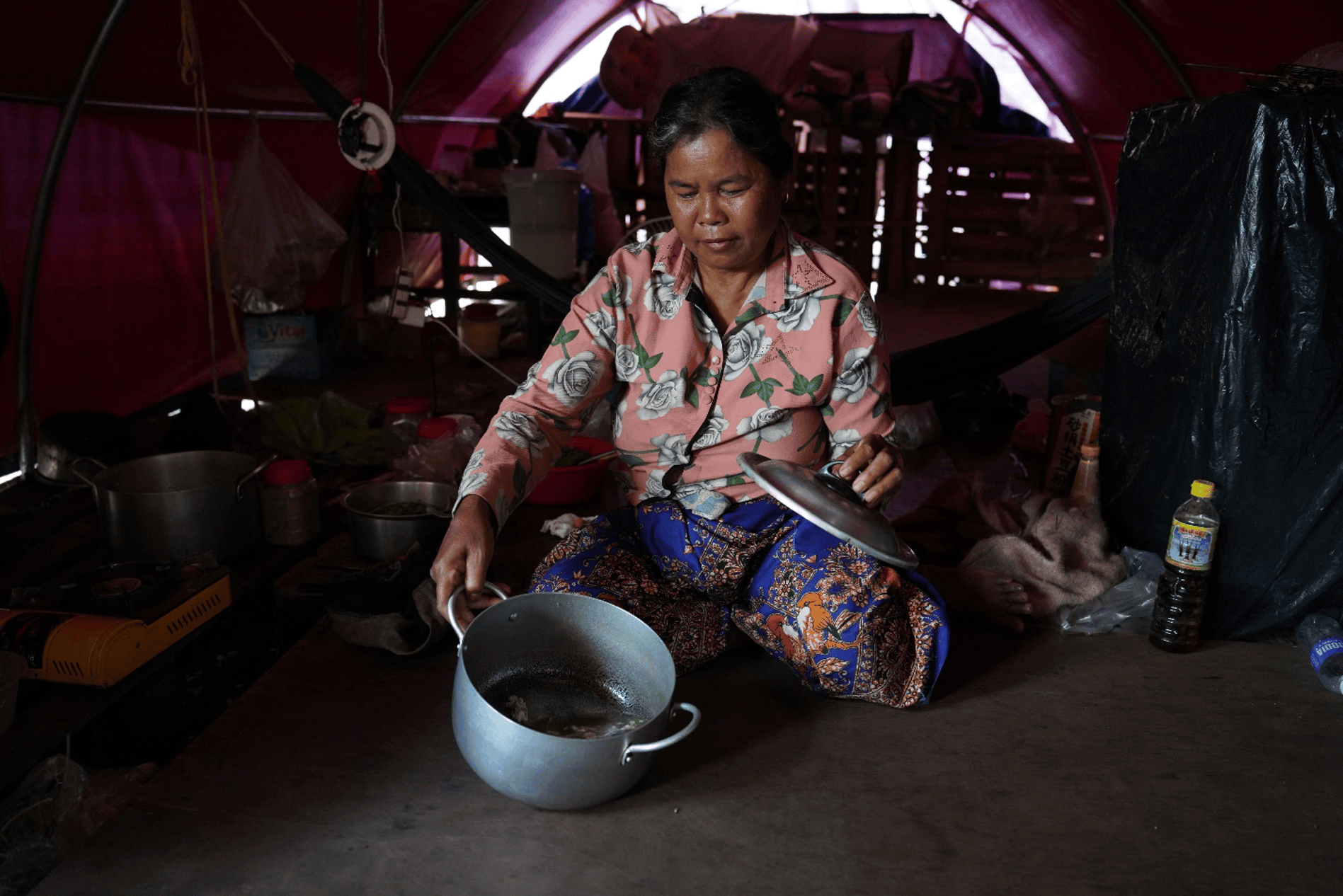
It has been nearly nine months since the ceasefire was signed on December 27, yet Article 4—the part that was supposed to let displaced villagers finally return home—remains a dead letter. In the camps scattered across Preah Vihear, Oddar Meanchey, Banteay Meanchey, and Pursat provinces, more than 20,000 Cambodians are still stuck waiting. Local officials and observers say the main reason they cannot go back is that the Thai side keeps putting up roadblocks.
What was supposed to be a straightforward return home has turned into a waiting game. Geopolitical observers point out that Thai troops are not only occupying Cambodian villages, temples, and farmland to keep locals out, but they are also building roads, houses, bunkers, and even statues while razing old homes to the ground. While Bangkok insists it is not blocking anyone, landmines and unresolved border demarcation keep getting dragged out as excuses. Local analysts believe it is a deliberate strategy to keep a firm grip on territorial bargaining chips.
Cambodia has shown restraint, choosing to handle the issue through protests and international diplomacy rather than resorting to arms, and Phnom Penh has the evidence to back it up. The head of the Cambodian Mine Action Centre has pointed out that under the ceasefire terms, even if Thai forces were allowed to temporarily stay put, they had no right to carry out construction, let alone block residents from returning to rebuild their lives. But for the families still stuck in tents and makeshift shelters, the wait goes on.