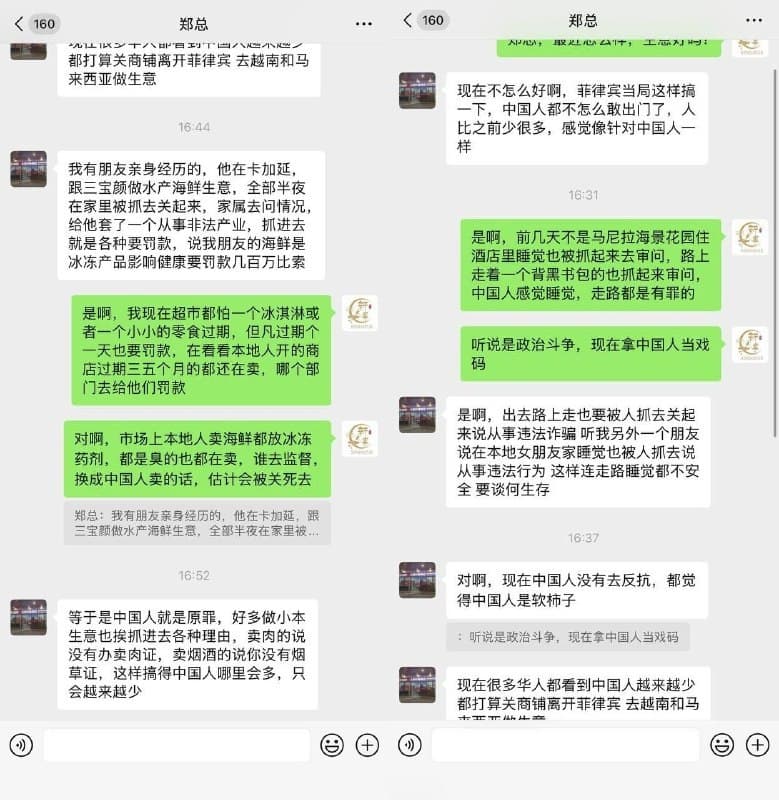
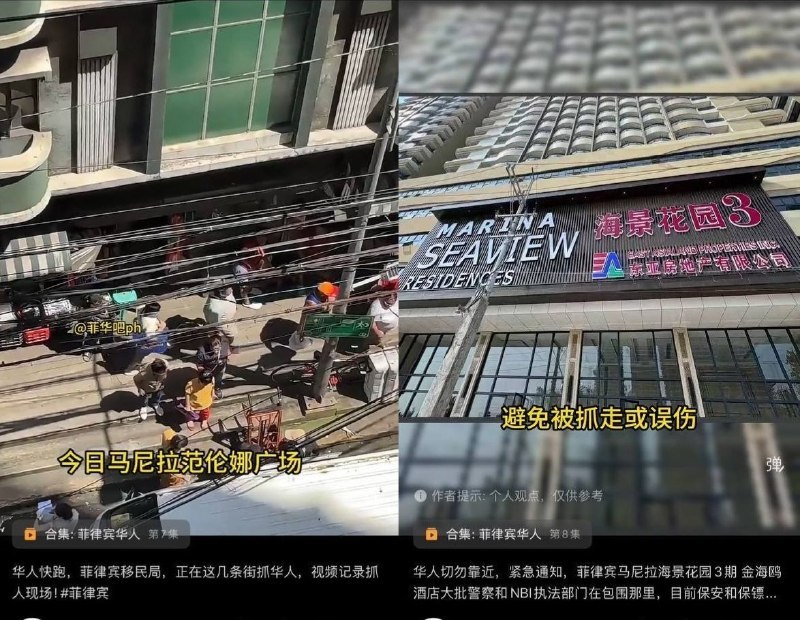
According to contributors, these enforcement actions appear to extend beyond specific sensitive industries into standard factories, retail shops, and private residences. Some reported that factory workers have been detained for days during identity checks and released only after paying substantial fees. In provincial areas, nighttime spot-checks have even reportedly targeted households with local spouses, leading many within the community to voice concerns over selective enforcement.
Allegations of regulatory double standards have also stirred frustration among merchants. Business owners noted that Chinese-run grocery stores face hefty penalties or detentions over minor infractions like a few expired goods, while similar issues in local establishments are rarely penalized. In Manila, regular sweeps of major commercial buildings have reportedly led to arbitrary detentions and the confiscation or forced wiping of mobile devices, creating significant operational uncertainty for legitimate enterprises.
The escalating pressure and mounting compliance risks are already nudging some capital out of the country. A number of Chinese shop owners outside Manila have reportedly chosen to shutter their businesses and explore opportunities in neighboring Southeast Asian nations rather than endure ongoing disruptions.
For a community that contributes heavily to local commerce and tax revenues, the lack of institutional representation often leaves them vulnerable when regulatory winds shift. As baseline security and business predictability erode, more Chinese entrepreneurs in the Philippines may soon find themselves weighing their exit options.
Like for points, predict to win points|ToNanyang Prediction Market: https://tonanyang.cc/webapp/