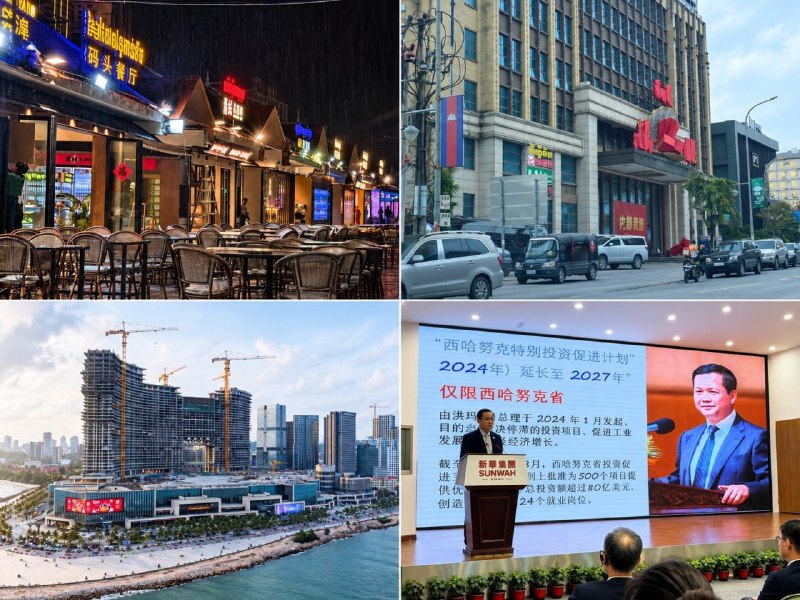
Walk down the streets of Sihanoukville these days, and the change hits you immediately: the crowds are thinning out fast. Where the sidewalks used to bustle with high-rollers heading to casinos and young workers spilling out of the compounds, areas like Chinatown and the Golden Lions roundabout are noticeably quieter now. A Chinese restaurant owner told me that daily turnover has crashed from six or seven hundred dollars down to just over two hundred. Tuk-tuk drivers have it even worse. They used to pull in fifty to eighty dollars a day, but nowadays they can sometimes scrape together just five dollars after a full shift—hardly enough to cover the cost of petrol.
With fewer people around, rents are tumbling. Properties that used to command sky-high prices have dropped thirty to forty percent across the board. Villas that rented for four to five thousand dollars a month can now be had for around two thousand, turning landlords who used to act like kings into desperate pleaders begging tenants to stay. Local media points out that as Cambodia cracks down hard on online gambling and phone scams—shutting down hundreds of suspected compounds and pulling or suspending the licenses of numerous casinos—the high-rent, high-consumption bubble built on the grey economy has finally popped for good.
Still, there is another side to the coin. As the grey operators clear out, legitimate investments are stepping in to fill the gap. According to official figures, several hundred projects in Sihanoukville have secured special investment incentives, pushing total investment past eight billion dollars, while the latest round of approvals has created over a thousand new jobs. Even though major real estate projects like Peninsula Bay have hit roadblocks and the short-term pain is far from over, Sihanoukville's economic foundation is slowly getting a transfusion, stretching from manufacturing to port logistics. Whether the city can sweat it out through this massive shake-up is the question on everyone's lips on the street.