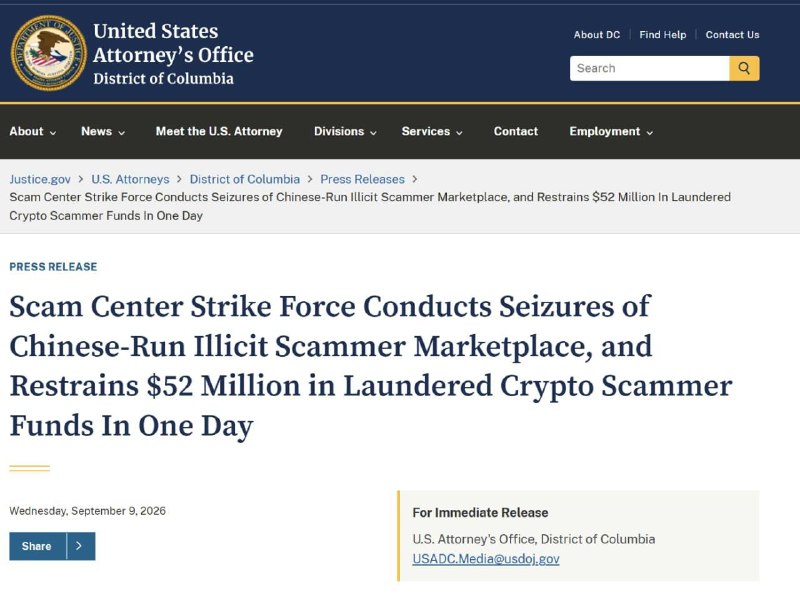
On September 9, the U.S. Department of Justice and the Treasury Department teamed up to take down Xinbi, an underground service provider operating openly on Telegram. According to local reports, more than $52 million in crypto assets were seized and restricted in a single day. Simply put, Xinbi specialized in building fake investment websites for pig-butchering scam syndicates, laundering their money, and even helping traffic people into Southeast Asian compounds. Tether also stepped in to assist authorities in mapping out their ledger system.
Law enforcement moved fast, shutting down Xinbi's Telegram channels and tracking down a network of crypto wallets. Around $12 million was sitting in just the first two wallets targeted, while another 47 related wallets were frozen. The U.S. Treasury went a step further, formally designating Xinbi as a major transnational criminal organization and hitting two front entities that helped cover their tracks. With this latest crackdown, the total value of scam-related assets handled by the U.S. anti-fraud task force is now closing in on $1 billion.
The syndicate's reach extended far beyond the digital space into physical compounds on the ground. Just recently, the same task force helped Madagascar authorities bust 13 scam compounds run by Chinese criminal gangs, seizing over 3,200 electronic devices and arresting nearly 400 people on the spot. Over iced coffee at local street-side cafes, people reading the news couldn't help but shake their heads: the criminal underground has grown a long tail, and everything from Telegram code to compounds as far away as Africa is firmly in the crosshairs.