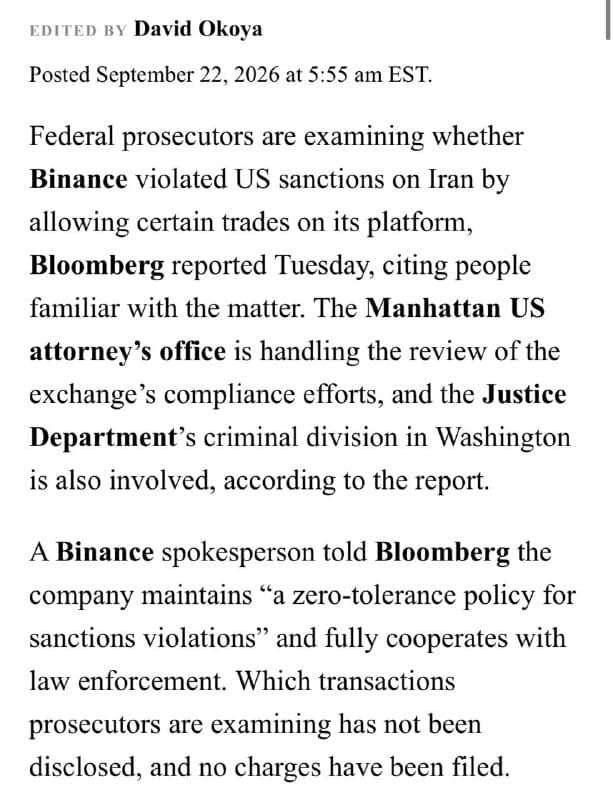
The U.S. Attorney’s Office for the Southern District of New York recently filed a civil forfeiture action targeting an Iranian oil smuggling network. According to prosecutors, the Iranian regime used a "shadow fleet" to move crude oil to independent refineries in Asia, laundering more than $1.5 billion through Hong Kong front companies and stablecoins. In a coordinated crackdown with the FBI and Tether, the issuer of USDT, authorities moved directly to freeze 10 TRON wallet addresses tied to the operation, blocking roughly 61.19 million USDT in an instant.
Federal agents locked down the entire cross-border money chain by pairing U.S. dollar correspondent bank wire records with detailed analysis of on-chain wallet activations and transfers. Many people used to assume that keeping Tether in a digital wallet kept it out of reach, but this case lays the reality bare: Tether will follow U.S. law enforcement mandates whenever called upon. Step over a red line, and your on-chain USDT can be frozen without warning. There is simply no room to take chances.
For those of us out here making a living across Southeast Asia, running shops on the street, moving freight, or trying to send money back to our families, dealing in USDT on the side has become a quick way to dodge high transfer fees and red tape. But what happened here ought to serve as a serious warning. Day in and day out, after paying the shop rent, settling the utility bills, and covering wages for the staff, every cent we hold onto is earned with real sweat. If you accidentally receive illicit or "dirty" USDT and get your wallet frozen, an entire year of honest work can disappear overnight. Building a life abroad is hard enough as it is. Keeping your money safe must always come first, and using proper, legitimate channels is the only way to get a good night's sleep.