
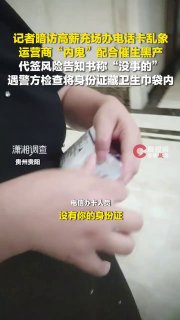
According to a Chinese media investigation, an undercover reporter found people being recruited with offers of well-paid "crowd filling" work to go to telecom service halls and register phone cards in bulk, with telecom company insiders cooperating in the scheme. During the undercover visit, risk disclosure forms were signed on the recruits' behalf, with the assurance that "it's fine." When police checks came, ID cards were hidden inside sanitary pad bags to avoid inspection. This kind of collusion between insiders and outsiders has fed a black market in phone cards.
Several parties in Guizhou have responded to the exposed collusion. The report put four questions to the telecom operators: Can the source really not be controlled? Are service halls truly unaware of the insiders? If cards can be activated remotely using another employee's staff number, where is the bottom line of real-name registration? And is the illegal card issuance driven by sales pressure, or by an exchange of benefits?
Even as China keeps up its crackdown on telecom fraud, real-name phone cards remain essential tools for scam networks at home and abroad, including the compounds in Southeast Asia. Insider failures and loopholes in remote activation hand these networks exactly what they need. Do not be tempted by "easy high pay" offers to lend out your ID or register phone cards or bank cards for others: doing so can easily cross the line into the crime of aiding information network criminal activities.
ToNanyang Prediction Market: https://tonanyang.cc/webapp/